Experiencing a Security Incident? → 24/7 Response: +91 73059 79248
Briskinfosec
COMPANY
About Briskinfosec Scope My Security Program Our Clients Testimonials Careers Partnership
INDUSTRIES
Banking & Financial Services Healthcare Manufacturing Government Energy & Utilities Telecom Technology Retail & E-Commerce All Industries →
CONNECT
Contact Us Request Assessment Responsible Disclosure Client Certificate Verification Training Certificate Verification
SECURITY TESTING (VAPT)
Web Application VAPT Mobile App Security API Security Testing Cloud Security Assessment Network Security Audit IoT Penetration Testing OT/SCADA Security Database Penetration Wireless Security CREST VAPT
ADVANCED ASSESSMENT
Red Team Operations AI/LLM Security Audit Digital Forensics Cyber Intelligence Secure Code Review DevSecOps Hardware Security Thick Client Security Host Level Security Automotive VAPT Telecom VAPT
DATA & PRIVACY
Data Security Audit Data Privacy Audit Data Masking & Privacy DSPM Data Breach Simulation SBOM & SCA Website Security All Assurance Services →
COMPLIANCE FRAMEWORKS
ISO 27001:2022 SOC 2 PCI-DSS HIPAA GDPR DPDPA NIST CSF IRDAI ISO 22301 (BCP) ISO 42001 (AI) IEC 62443 (OT) ISO 21434 (Automotive) PDPL (Saudi)
GRC SERVICES
GRC Framework Cyber Risk Assessment Third-Party Risk (TPRM) Data Privacy Compliance Data Retention Policy National Security Compliance Cybersecurity Insurance All Compliance →
GOVERNANCE LAYER
Data Governance Security Posture Management Cybersecurity Maturity AI Maturity Assessment Cyber Resilience BCP/DR Planning vIT Compliance Business Impact Analysis
MANAGED SECURITY
Managed Security (MSSP) SOC as a Service V-CISO Incident Response Virtual Security Team Third Eye (Surveillance)
CONTINUOUS MONITORING
SOAR Integration Security Monitoring Threat Intelligence Platform Cyber Threat Intelligence Lateral Movement Detection Penetration Test as Service
DEFENSIVE OPS
Perimeter Security Access Control Review Cloud Config Review CDN Security Network Architecture Cloud Security Management Virtualization Security All MSSP Services →
ELITE ASSESSMENTS
Threat Modeling Ransomware Readiness Threat & Vulnerability Mgmt Military Grade Review Hacker's POV Assessment
HUMAN LAYER
Security Awareness Training Phishing Simulation Tabletop Exercise Secure Code Training Cybersecurity Culture Cybersec Leadership Incident Response Training Data Privacy Training
STRATEGIC SERVICES
Application Security Governance Quarterly AppSec Review Minimum Security Baseline Secure SDLC Cyber Sense Plan Integration Threat Analysis Infra Risk Assessment Web Extensions Security bSAFE Security Score Layered Security Philosophy All Maturity Services →
PLATFORMS
LURA Portal LuraInsight (SAST) bSAFE Score BriskBox All Products →
Staffing
LEARN
Blog Videos Case Studies Press Room
INTELLIGENCE
Threatsploit Reports Security Essentials Carousel Flyers & Downloads All Resources →
Briskinfosec is a CREST accredited cybersecurity firm, globally recognized for penetration testing and VAPT services Briskinfosec is a CERT-In empanelled cybersecurity company based in Chennai with global operations in Dubai
Get Your bSafe Score →
Briskinfosec
COMPANY
About Briskinfosec Scope My Security Program Our Clients Testimonials Careers Partnership
INDUSTRIES
Banking & Financial Services Healthcare Manufacturing Government Energy & Utilities Telecom Technology Retail & E-Commerce All Industries →
CONNECT
Contact Us Request Assessment Responsible Disclosure Client Certificate Verification Training Certificate Verification
SECURITY TESTING (VAPT)
Web Application VAPT Mobile App Security API Security Testing Cloud Security Assessment Network Security Audit IoT Penetration Testing OT/SCADA Security Database Penetration Wireless Security CREST VAPT
ADVANCED ASSESSMENT
Red Team Operations AI/LLM Security Audit Digital Forensics Cyber Intelligence Secure Code Review DevSecOps Hardware Security Thick Client Security Host Level Security Automotive VAPT Telecom VAPT
DATA & PRIVACY
Data Security Audit Data Privacy Audit Data Masking & Privacy DSPM Data Breach Simulation SBOM & SCA Website Security All Assurance Services →
COMPLIANCE FRAMEWORKS
ISO 27001:2022 SOC 2 PCI-DSS HIPAA GDPR DPDPA NIST CSF IRDAI ISO 22301 (BCP) ISO 42001 (AI) IEC 62443 (OT) ISO 21434 (Automotive) PDPL (Saudi)
GRC SERVICES
GRC Framework Cyber Risk Assessment Third-Party Risk (TPRM) Data Privacy Compliance Data Retention Policy National Security Compliance Cybersecurity Insurance All Compliance Services →
GOVERNANCE LAYER
Data Governance Security Posture Management Cybersecurity Maturity AI Maturity Assessment Cyber Resilience BCP/DR Planning vIT Compliance Business Impact Analysis
MANAGED SECURITY
Managed Security (MSSP) SOC as a Service V-CISO Incident Response Virtual Security Team Third Eye (Surveillance)
CONTINUOUS MONITORING
SOAR Integration Security Monitoring Threat Intelligence Platform Cyber Threat Intelligence Lateral Movement Detection Penetration Test as Service
DEFENSIVE OPS
Perimeter Security Access Control Review Cloud Config Review CDN Security Network Architecture Cloud Security Management Virtualization Security
ELITE ASSESSMENTS
Threat Modeling Ransomware Readiness Threat & Vulnerability Mgmt Military Grade Review Hacker's POV Assessment
HUMAN LAYER
Security Awareness Training Phishing Simulation Tabletop Exercise Secure Code Training Cybersecurity Culture Cybersec Leadership Incident Response Training Data Privacy Training
STRATEGIC SERVICES
Application Security Governance Quarterly AppSec Review Minimum Security Baseline Secure SDLC Cyber Sense Plan Integration Threat Analysis Infra Risk Assessment Web Extensions Security bSAFE Security Score → Layered Security Philosophy →
PLATFORMS
LURA Portal LuraInsight (SAST) bSAFE Score BriskBox All Products →
Staffing
LEARN
Blog Videos Case Studies Press Room
INTELLIGENCE
Threatsploit Reports Security Essentials Carousel Flyers & Downloads All Resources →
Home → Blog → Why large organizations suffer frequent...
General

Why large organizations suffer frequent cyber-attacks than smaller ones?

April 27, 2020
7 min read
5,447 Views
Contents
Why large organizations suffer frequent cyber-attacks than smaller ones?

Larger organization have built lots of inefficiencies that impact their ability in managing huge amount of data created as part of their business. In most cases, the internal security team fail to identify and protect the business data. Let us explore more.

Contents

  • Introduction
  • what is Cyber-Attack
  • passive Attacks
  • Recent attack on WHO
  • Active Attacks
  • IoT Based
  • Conclusion

Introduction

With ever changing need to access data from anywhere, we tend to prefer cloud services. When travelling, due to perceived emergencies, we mistakenly connect our official devices to public Wi-Fi or on unsecured networks? This invariably leads to organization getting to be affected.

We will discuss in detail how large organizations are frequently attacked by hackers.
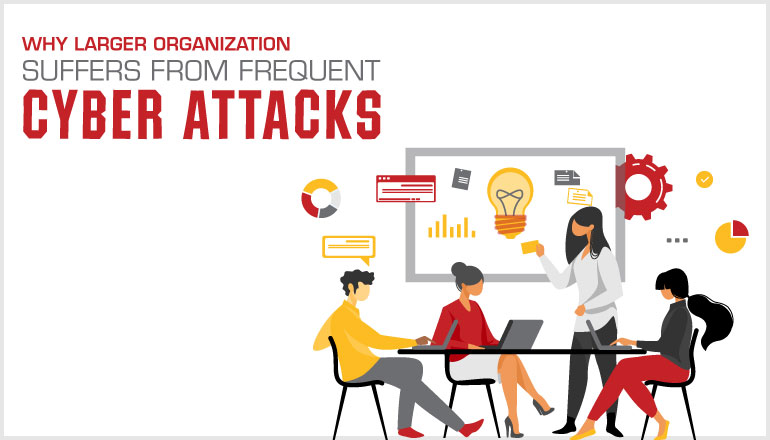
image

What is Cyber-Attack?

An attack is employed to steal, destroy or gain an unauthorized access to the computer, network, and infrastructure. These are performed by an individual or by a group of experts targeting the organisation information with the intention to publicly expose or privately exploit. There are two major kinds of cyber-attacks used by attackers.

  • Passive attacks
  • Active attacks

Passive attacks

These attacks are performed by the intruder whose intention is to gain entire system/network access without leaving any footprints. These attacks are often carried without any changes being observed by the users. There are various kinds of attacks which can take place over a network by just scanning their open ports and by using older versions of vulnerable software. These attacks are mostly common in wireless interface as they could be identified or detected. In the development of IoT where all organizations moving towards digital have a major thread occurring towards their organization. They can broadly be classified into sniffing and tapping into their wireless network interface.
image

image

Sniffing

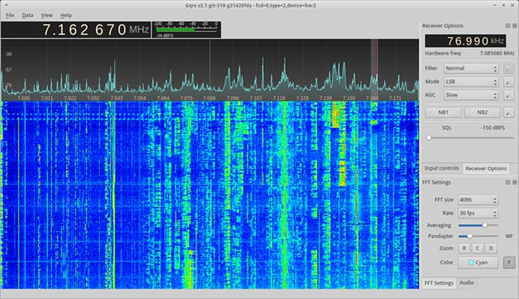
For simpler and better understanding let us consider a remote car. The main objective of the Intruder is to sniff the data packets transmitting and to identify the type of modulation scheme used between the devices, i.e., the remote and the car. We should identify the operating frequency of the device and build some blocks by using the GNU platform where python is used in its backend. Then by just plugging in the SDR we used to sniff the data and display it in FFT where we can see the data moving whenever user accesses the remote and moreover this attack can be performed even at a distance of upto 30 meters with less or no distortion.

Tapping

Before performing this process the intruder should sniff the target and confirm whether the device is active or not. Once done he can just modify the data without the help of the user to perform this attack like the qualpwn vulnerability.

Recent Attacks on WHO (World Health Organization)

World Health Organisation has reported some suspicious activities in their networks. Also hackers around the world use WHO as their name and target individuals to gather username passwords of their accounts. To get frequent updates subscribe to our newsletter.

Preventing Passive attacks

  • Use better encryption algorithm.
  • Use better entropy with rolling code scheme for pairing the devices.
  • Disconnect the device when not in use.
  • Limit the range of frequency to a certain distance or operate whenever necessary.
  • Turn off the device when it is not active more than 2 minutes.

Want to secure your Digital Assets please contact Us

Active attacks

In these types of attack, the user could be identified after a certain period of time or when finishing the attack. The most common such attacks are ransom-ware, malware and DDoS. Let us understand how these attacks are further classified and the impact on the victims.

Product based attacks

Before digging into the types of attacks, let us dive into the virtual world. We have two organizations doing business with the same motto where one is an established company and the other is just a start up.

image

To be easier let’s assume the established as X and the other as Y. X produces more products per year and they sell it across by just doing a basic functional level testing and they don’t tend to care about their cyber-risk factor in their product after a small change. They simply perform the basic functional level and cyber-security audit and they sell their product. As Y has to portray their product in a different way they tend to perform basic cyber security test to their product and they follow the procedures after each and every updates of the product. Intruders can also attack the small companies but they won’t find large volumes of data.

Infrastructure based

X usually has more no of Internet service provider and data centers. They also have to perform periodic audits not only to their products but also to their data centers. On the other hand, Y is a small team with less number of units and if any breach occurs, Y can detect quickly than in the case of X. Here X plays a major role as it has more number of devices, they should be organized in an proper manner for example if X has 100 routers and 5 data centers, at least three person will be required to maintain all these and they should have been assigned with equal responsibilities to all the infrastructure related services.

Click here to know more about Infrastructure security testing

IoT Based

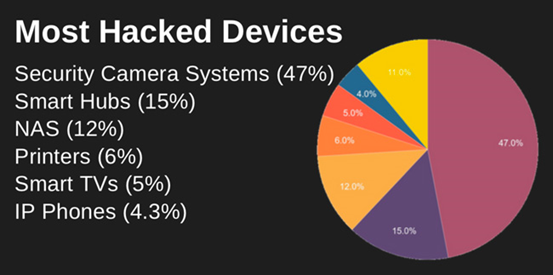
 Now let us come to the hardware part of security in X and Y. Both the firm consists of attendance machine for their employees, network firewall settings; Where X additionally consists of automatic coffee machine, smart speaker and other appliances. These smart devices are more vulnerable from the intruder perspective. You would have heard that the IoT has no standard till date, have you ever thought about this?? As these smart devices are publicly exposed over the internet there are various ways for an intruder to enter into your premises without any physical intervention. They don’t need to come to access it physically. It is enough if they compromise any one of the employees system by providing an attachment in mail or sending a notification in the mobile device. When the user clicks on it the employee comprises the mobile devices and once it gets connected to his office network the intruder has full access to view the each nook and corner of the network and thereby performs an attack. The surveillance cameras are also easily accessed by the intruder if he knows the manufacturer’s name and the model number. Statistics says that most attacks are initiated from the cameras.
 image

image

Recently attacked MUKASHI botent compromised the NAS system of the zyxel system which is used by most of the corporates. These systems should be connected to a separate network isolated form the others. I would suggest the X companies to follow the below guidelines to be away from cyber-attacks .

    Click here to know more about IOT security testing

Preventing active attacks

  • Desktops/laptops should be provided for the employees.
  • Employees should not connect their desktops to their personal networks using mobile data or any other publicly available networks.
  • Signals strength should be limited within their premises.
  • While using wireless connectivity we suggest you to update your firmware and applications.
  • Isolate the connected devices to a separate network as guided by FBI, which minimizes the data loss when attacked.
  • Replace the devices if the support gets terminated.
  • Don’t use default passwords in any of your networks, instead create a strong password with a combination of uppercase lowercase and special characters.
  • Try to segregate the routers with respective of the departments.

Conclusion

Since the larger organization consists of more number of devices it is difficult for the organization to manage. Hackers will not care regarding the company’s size it may be a small or big sized company all they need is to comprise the entire system to gain access. Hence following the above provided guidelines organizations would be safe and will stay away from cyber-attacks.
You May be Also Intrested On

  • Security challenges in React and Interact
  • Cyber-Kill chain
  • Best of IT defense cannot protect you

Resources          

  • Interpol report
General
Share this article
A
Written by
Arulselvar Thomas Founder & Director
Cybersecurity expert at Briskinfosec Technology and Consulting, specializing in security assessments, compliance, and helping organizations build resilient security postures.
Recent Blogs
Cybersecurity Tabletop Exercises and Vendor Risk Management
Building an AI-Augmented SOC That Actually Works
How to Create a Secure AWS IAM Audit User for Cloud Security Assessments
Related Services
VAPT Cloud Security Red Team Network Security API Security Mobile App Security
Latest Videos
Navigating Compliance in Cybersecurity Laws, Privacy laws and Your Business
Navigating Compliance in Cybersecurity Laws,...
Apr 26, 2024
Beyond Size: How to Elevate your SOC Cybersecurity Monitoring
Beyond Size: How to Elevate your SOC Cybersec...
Mar 20, 2024
Red Team Assessment
Red Team Assessment
Mar 13, 2024
Get Protected

Discuss your security posture with our certified experts. Get a free initial assessment.

Schedule Free Consultation WhatsApp Us

Related Articles

Phishing Simulation Reveals How Employees Respond to a Fake CEO Email
Apr 29, 2026 · 473
Your Former Employees Still Have Access to Your Systems and Data
Apr 29, 2026 · 545
Your Cyber Insurance Claim May Be Rejected
Apr 20, 2026 · 734
Read Next (Top Blog)
Getting Started with Frida

Ready to Strengthen Your Security?

Talk to our CREST-certified security experts today

WhatsApp Us
Chat instantly with our security team
AI Presales Bot
Get instant answers from LURA AI
Schedule Consultation
Book a free security consultation
Email Us
contact@briskinfosec.com
Link copied to clipboard!
About Us
About Briskinfosec Certin Our Clients Testimonials Press Room
Services
Application Security Mobile App Security Cloud Security Red Team Operations SOC as a Service MSSP All Services →
Compliance
ISO 27001 SOC 2 PCI-DSS GDPR HIPAA All Compliance →
Resources
Blog Videos Case Studies Threatsploit Reports All Resources →
Connect
Careers Partnership Contact Us Responsible Disclosure Terms and Conditions Privacy Policy
India (HQ) Bascon Futura Sv It Park, 12th Floor, 10/2,
Venkatanarayana Rd, T. Nagar, Chennai, Tamil Nadu 600017
+91 73059 79248 · contact@briskinfosec.com
UAE (Dubai) IFZA Business Park, Building A1, Dubai Digital Park,
Dubai Silicon Oasis, Post Box 342001, UAE
contact@briskinfosec.com
Briskinfosec CREST accredited cybersecurity company and globally recognized provider of penetration testing and VAPT services CERT-In empanelled cybersecurity company with headquarters in Chennai and operations in Dubai offering VAPT services Briskinfosec ISO 27001 certified company ensuring robust information security management system Briskinfosec ISO 9001:2015 certified cybersecurity company committed to quality management in India Briskinfosec is a DUNS registered cybersecurity company with a verified global business identity offering VAPT services
© 2026 Briskinfosec Technology & Consulting Pvt Ltd. All rights reserved.
Scope Your Security Program
Chat on WhatsApp Ask LURA AI AI