Table of Contents
- The Growing Imperative for GDPR Compliance in Healthcare
- Market Insights: The Rising Value of Healthcare Data
- Recent Breaches & Lessons Learned
- Regulatory Updates: Navigating GDPR and Beyond
- Real-World Scenario
- GDPR Compliance Measures That Could Have Prevented the Breach
- Implementing GDPR Best Practices to Mitigate Risks
- GDPR Principles
- Solution Frameworks Aligned with Briskinfosec Services
In the European Union, healthcare organizations are legally obligated to protect patient data under the General Data Protection Regulation (GDPR). Non-compliance can result in steep fines of up to €20 million or 4% of annual global turnover whichever is higher. As cybercriminals target valuable healthcare data with increasing sophistication, adhering to GDPR has become a non-negotiable necessity for healthcare providers, insurers, and any organization handling patient data.
The Growing Imperative for GDPR Compliance in Healthcare
Did you know that healthcare data breaches accounted for over 30% of all reported data breaches in Europe in 2024? Imagine a hospital losing control over patient medical histories, test results, and personal identifiers leading to a loss of trust, massive fines, and reputational damage. In today's interconnected healthcare ecosystem, patient data is a prime target for cybercriminals, making GDPR compliance not just a legal obligation but a critical safeguard against devastating consequences.
Market Insights: The Rising Value of Healthcare Data
- Healthcare data has become a prime target for cybercriminals, given its rich and sensitive nature. Unlike financial data, which can be quickly changed, medical records are permanent, making them more valuable on the dark web.
- A 2024 report by Cybersecurity Ventures projected that healthcare data breaches would triple by 2026, with patient records fetching up to €250 per record on the dark web.
Recent Breaches & Lessons Learned
- UnitedHealth's Data Breach via Change Healthcare
- Incident: In February 2024, UnitedHealth's technology unit, Change Healthcare, suffered a ransomware attack by the ALPHV (BlackCat) group.
- Impact: The breach compromised personal information of over 100 million individuals, including health insurance IDs, patient diagnoses, treatment details, Social Security numbers, and billing codes.
- Consequences: UnitedHealth reported significant business disruptions, forecasting $705 million in costs for the year.
- Providence Medical Institute's Ransomware Attack
- Incident: Providence Medical Institute experienced multiple ransomware attacks in 2024.
- Findings: The U.S. Department of Health and Human Services' Office for Civil Rights (OCR) identified violations of the HIPAA Security Rule, including lack of risk analysis and insufficient access controls.
- Penalty: A civil monetary penalty of $240,000 was imposed.
Regulatory Updates: Navigating GDPR and Beyond
- GDPR (General Data Protection Regulation): Enforced since 2018, GDPR mandates strict data protection practices, including data minimization, encryption, and breach notification within 72 hours.
- ISO 27001:2022: The updated version of the ISO 27001 standard, aligned with GDPR, provides a structured approach to information security management systems, helping organizations maintain compliance.
Why Healthcare Data Breaches Are Alarming
Healthcare organizations handle highly sensitive data from patient health records to personal identifiers making them attractive targets for cybercriminals. The consequences of a data breach in this sector extend beyond financial loss:
- Patient Trust: A breach can damage the trust patients have in healthcare providers, potentially leading to decreased patient engagement and reputation loss.
- Operational Disruptions: Cyberattacks can paralyze healthcare services, disrupting patient care and emergency response.
- Regulatory Penalties: Non-compliance with GDPR can result in severe fines up to €20 million or 4% of annual global turnover, whichever is higher.
Real-World Scenario
The 2024 Breach at St. Antonius Hospital in the Netherlands
In 2024, St. Antonius Hospital in the Netherlands experienced a significant data breach when an internal staff member accessed sensitive patient data without authorization. The breach involved the personal medical records of high-profile patients, leading to a public outcry and a hefty fine.
Key Issues:
- Inadequate Access Controls: Internal staff members were able to access patient data without proper restrictions, allowing sensitive information to be viewed by unauthorized personnel.
- Lack of Monitoring and Auditing: The hospital failed to implement proper monitoring and auditing systems to detect and track unauthorized access in real-time.
- Employee Awareness Gaps: Staff were not sufficiently trained or made aware of the importance of patient data privacy and the consequences of violating GDPR guidelines.
GDPR Compliance Measures That Could Have Prevented the Breach
- Implementing Role-Based Access Controls (RBAC): Restricting access to patient data based on job responsibilities.
- Monitoring and Auditing Access: Regularly auditing access logs to detect unauthorized attempts.
- Employee Training: Conducting awareness sessions to educate staff about data privacy and GDPR compliance.
This incident serves as a cautionary tale, illustrating how a lack of robust access controls and employee training can lead to severe legal and financial consequences. Healthcare providers must enforce strict access controls and conduct ongoing staff training to ensure compliance.
Implementing GDPR Best Practices to Mitigate Risks
To achieve GDPR compliance and safeguard patient data, healthcare organizations need to implement a multi-layered approach focusing on three key areas: people, processes, and technology.
GDPR Principles
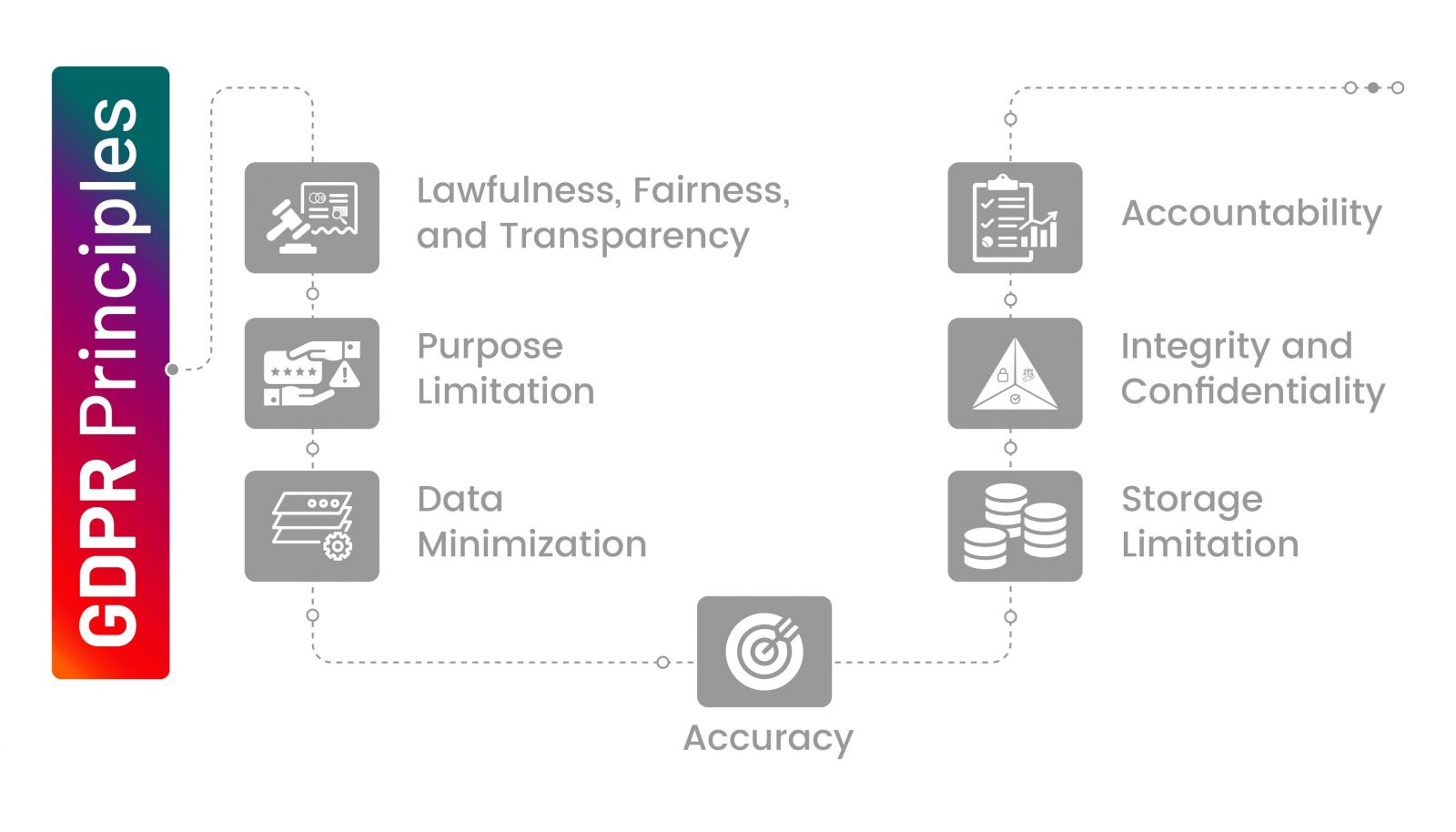 The GDPR is built on 7 key principles that guide data processing activities. These principles are crucial for maintaining data privacy and compliance.
- Lawfulness, Fairness, and Transparency:
- Data processing must have a legal basis, be fair to the data subject, and be transparent about how data is used.
- Purpose Limitation:
- Data should be collected for specific, explicit, and legitimate purposes and not processed further in a way incompatible with those purposes.
- Data Minimization:
- Only collect and process data that is necessary, relevant, and limited to the intended purpose.
- Accuracy:
- Ensure that personal data is accurate, complete, and kept up to date. Inaccurate data must be corrected or deleted promptly.
- Storage Limitation:
- Retain personal data for no longer than necessary for the purpose it was collected. Implement data retention policies to manage this.
- Integrity and Confidentiality:
- Process data securely, ensuring its protection from unauthorized access, loss, destruction, or damage. This requires technical and organizational measures.
- Accountability:
- Organizations must demonstrate compliance with GDPR principles, maintain records, conduct assessments, and implement data protection measures.
Solution Frameworks Aligned with Briskinfosec Services
Navigating the complexities of GDPR compliance in the healthcare sector can be challenging, but you don't have to do it alone. At Briskinfosec, we specialize in providing tailored cybersecurity solutions to help healthcare organizations protect patient data while adhering to GDPR standards.
How Briskinfosec Can Support Your GDPR Compliance Journey:
- GDPR Compliance Assessment
- Data Protection Impact Assessments (DPIA)
- Policy Development and Documentation
- Data Subject Rights Management
- Security of Processing
- Data Breach Management
- Employee Awareness and Training
- Third-Party Risk Management
Secure Patient Data and Build Trust with Briskinfosec
GDPR compliance is not just a regulatory requirement it’s an opportunity to build trust with your patients, protect your reputation, and safeguard sensitive data. With our expertise and experience in healthcare cybersecurity, we can help you achieve and maintain GDPR compliance effectively.
Ready to protect patient data and strengthen compliance?
Contact Briskinfosec today for a consultation and take the first step toward a secure, GDPR-compliant healthcare environment.
Protecting patient data is not just about compliance it's about trust, reputation, and the future of healthcare. If you're looking to strengthen your data protection strategy and achieve GDPR compliance, we're here to help!