Threat & Vulnerability Management
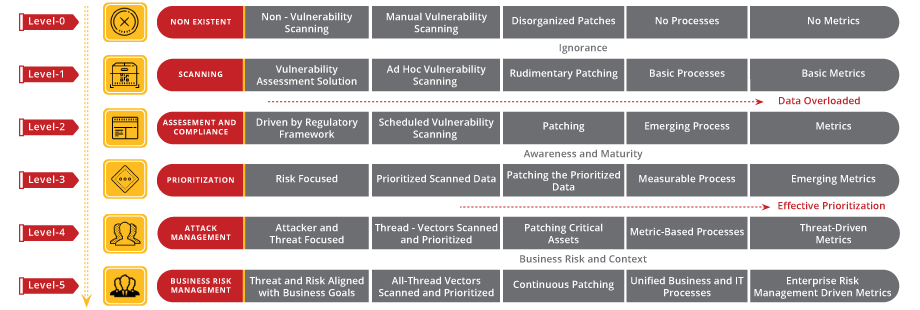
Continuous vulnerability management program - discovery, prioritization, remediation tracking, and risk-based vulnerability scoring across your entire infrastructure.

Why Threat & Vulnerability Management Matters
Every organization faces these critical risks. Without proper assessment, these vulnerabilities become attack vectors for adversaries.
Vulnerability Overload Without Prioritization
Thousands of vulnerabilities but no way to know which matter. We implement risk-based scoring using CVSS, exploit availability, asset criticality, and threat intelligence context.
Unknown & Unmanaged Assets
You can't protect what you can't see. Our continuous asset discovery identifies shadow IT, rogue devices, and forgotten infrastructure across on-premise and cloud.
Slow Remediation Cycles
Average patch time of 60+ days leaves critical vulnerabilities exposed. We implement SLA-driven remediation workflows with automated tracking and escalation.
Missing Continuous Scanning
Point-in-time scans miss vulnerabilities introduced between assessments. Our continuous scanning ensures new assets and vulnerabilities are detected within hours.
Compliance Reporting Gaps
Inability to demonstrate vulnerability management maturity to auditors. Our platform generates compliance-ready reports mapped to your regulatory requirements.
Third-Party & Cloud Vulnerability Blindness
SaaS applications, cloud workloads, and partner systems creating unmonitored vulnerability exposure outside your traditional scanning scope.
What We Assess
A comprehensive, methodical evaluation covering every critical surface area.
Deep-Dive Coverage - Every Nuance Addressed
Threat & Vulnerability Management isn't one-size-fits-all. Different contexts demand different assessment approaches. We go beyond generic checklists to address the specific attack surfaces and risks of each domain.
Exposure-Based Vulnerability Prioritization
Modern vulnerability management must prioritize real exploitability and business exposure, not scanner volume. This domain aligns findings to reachable attack paths, known adversary behavior, and asset criticality.
- ▸ Prioritization logic using KEV status, EPSS, internet exposure, exploit maturity, and compensating controls
- ▸ Attack-path correlation between vulnerable hosts, exposed identities, segmentation gaps, and privileged routes
- ▸ Context enrichment from CMDB, business service maps, crown-jewel tagging, and ownership data
- ▸ Deduplication across agent, network, container, code, and cloud findings to create one remediation truth
- ▸ Risk-based SLA tuning that differentiates edge systems, internal dev assets, OT nodes, and regulated platforms
Continuous Attack Surface & Asset Intelligence
Vulnerability management fails when asset inventories are stale. This domain assesses how well organizations maintain continuously updated visibility across traditional, cloud-native, and ephemeral assets.
- ▸ Discovery of ephemeral cloud instances, containers, serverless functions, and unmanaged developer systems
- ▸ Certificate, DNS, and cloud account correlation to find shadow assets outside central inventories
- ▸ EOL and unsupported software tracking across infrastructure, middleware, appliances, and embedded systems
- ▸ Software bill of materials integration for third-party component exposure and dependency drift
- ▸ Lifecycle controls for orphaned systems, abandoned load balancers, and dormant external services
Remediation Orchestration & Compensating Control Validation
The hard part of vulnerability management is driving closure across teams without operational damage. This domain evaluates whether remediation workflows are automated, accountable, and evidence-backed.
- ▸ Patch orchestration across Windows, Linux, network devices, containers, golden images, and SaaS connectors
- ▸ Verification of virtual patching through WAF, IPS, EDR prevention, and microsegmentation controls
- ▸ Change-risk modeling to sequence remediation around business windows and dependency conflicts
- ▸ Exception governance for legacy systems with documented residual risk, expiry dates, and control reviews
- ▸ Closed-loop validation using rescans, config checks, and exploit simulation rather than ticket closure alone
Threat-Led Program Governance
This domain aligns the vulnerability program with active threat intelligence, adversary tradecraft, and executive reporting expectations. It ensures the program answers the question executives actually ask: where are we truly exposed right now?
- ▸ Use-case mapping between ATT&CK techniques, recent threat activity, and internal control weaknesses
- ▸ Rapid response workflow for new KEV additions, vendor zero-days, and active exploitation campaigns
- ▸ Executive metrics for exploit exposure window, high-risk asset aging, and control efficacy by domain
- ▸ Governance mapping to NIST CSF 2.0, CIS Controls 7 and 18, and internal risk appetite statements
- ▸ Purple-team feedback loops to validate whether prioritized vulnerabilities are actually exploitable in practice
Assessment Process
A structured, repeatable methodology delivering consistent, high-quality results across every engagement.
Learn More About Threat & Vulnerability Management
Watch our expert walkthrough and download our comprehensive flyer to share with your team and stakeholders.
Why Choose Us for Threat & Vulnerability Management
India's Only CREST-Approved for VA & PT
International gold standard in security testing - the only Indian company with dual CREST accreditation for both Vulnerability Assessment and Penetration Testing.
Vulnerabilities Discovered
Proven track record across 5500 assessments. Every finding is manually validated with proof-of-concept - zero false positives.
Real-Time Project Portal
Track assessment progress, view findings, and collaborate with our team through our proprietary LURA platform. Security Simplified.
Standards & Frameworks We Cover
Assess Your Wireless Security
Talk to our CREST-certified security experts today. Free scoping call, no obligation.
Or email us at contact@briskinfosec.com
Frequently Asked Questions
Clear answers to help you make informed security decisions for your organization.
How long does the Threat & Vulnerability Management take?
Typically 1-3 weeks depending on scope and complexity. We provide a detailed timeline during the scoping phase based on your specific environment and requirements.
Will the assessment affect our production systems?
We use carefully controlled, non-destructive testing techniques for production environments. For invasive tests, we coordinate timing with your team and can test on staging environments.
What certifications do your testers hold?
Our team holds OSCP, CREST CRT, CEH, CISSP, and CISM certifications. Briskinfosec is CREST-approved for both Vulnerability Assessment and Penetration Testing - the only Indian company with this dual accreditation.
Do you provide re-testing after remediation?
Yes. We include one round of complimentary re-testing within 90 days to validate all findings have been properly remediated. The re-test report is provided through our LURA portal.
What deliverables do we receive?
You receive a comprehensive report with executive summary, detailed technical findings with CVSS scores, proof-of-concept demonstrations, risk-prioritized remediation guidance, and access to our LURA portal for ongoing tracking.
Still have questions?
Our cybersecurity experts are ready to provide custom answers tailored to your organization's unique threat landscape and compliance requirements.
Talk to an Expert →