
Table of Contents
- The Strategic Challenge: Why the "Castle-and-Moat" Fails in Modern Finance
- Zero Trust: A New Security Paradigm Explained
- Why Certified Expertise Matters: Building a Defensible Zero Trust Roadmap
- A Phased Approach to Zero Trust Implementation
- Tangible Business Benefits for Financial Institutions
- Conclusion
For decades, financial institutions built their security like a medieval castle: a formidable perimeter with high walls, a deep moat, and the implicit belief that everything and everyone inside was trusted. But in the modern financial ecosystem a world of cloud-native core banking, mobile payment apps, interconnected FinTech APIs, and a distributed workforce the perimeter has dissolved. The very notion of a trusted "inside" versus an untrusted "outside" is now dangerously obsolete.
This new reality demands a new security paradigm. The "castle-and-moat" model is no longer defensible. For financial institutions entrusted with our most sensitive data, the future of security is Zero Trust.
Implementing a Zero Trust Architecture is not just a technical upgrade; it is a fundamental strategic shift required to protect customer assets, maintain operational resilience, and meet the intense scrutiny of regulators. As a firm that is both CREST-approved and CERT-IN empanelled, we provide the validated expertise to guide financial institutions on this critical journey, helping you to fortify your future against the threats of tomorrow.
The Strategic Challenge: Why the "Castle-and-Moat" Fails in Modern Finance
The traditional security model is breaking under the pressure of digital transformation and the sophistication of modern threats. For financial institutions, the risks are particularly acute.
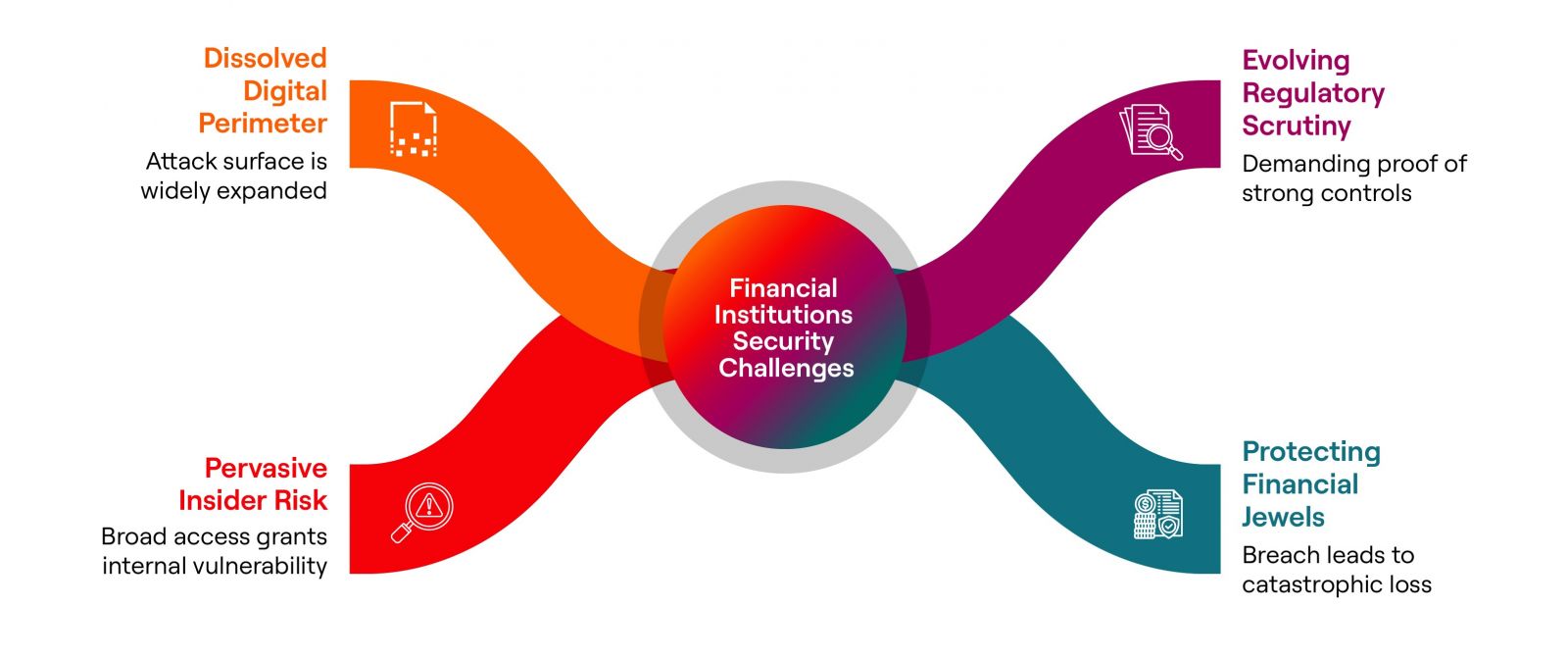
- The Dissolved Digital Perimeter:
Your attack surface is no longer just your data center. It's every customer using your mobile banking app, every employee working from home, every cloud service you consume, and every third-party FinTech you partner with via API. A perimeter-based defense is meaningless when your most critical operations span the globe.
- The Pervasive Threat of Insider Risk:
Financial institutions are a prime target for insider threats, whether from a malicious employee or, more commonly, a credential theft attack where an external actor masquerades as a trusted insider. The traditional model, which grants broad access to internal users, is a significant vulnerability when a single compromised account can lead to massive fraud or data theft.
- Intense and Evolving Regulatory Scrutiny:
Regulators across the globe, from the Reserve Bank of India (RBI) to the European Union's DORA (Digital Operational Resilience Act), are demanding more than just perimeter security. They require demonstrable proof of strong internal controls, data-centric protection, and operational resilience. They want to know how you are protecting data on the move and within your network. A Zero Trust Architecture provides a powerful, defensible answer to these exacting demands.
- Protecting the Financial "Crown Jewels":
For a bank, a breach is not just a reputational issue; it can be a systemic one. The "crown jewels" of customer financial data, payment processing systems, and sensitive market intelligence must be protected with the highest level of assurance. A single breach can lead to catastrophic financial loss, regulatory fines, and an irreversible loss of customer trust.
Zero Trust: A New Security Paradigm Explained
Zero Trust operates on a simple but powerful principle: Never Trust, Always Verify.
It assumes that no user or device is trusted by default, regardless of its location. Every single request to access a resource must be treated as a potential threat. Before access is granted, a Zero Trust system continuously verifies the request against multiple context points:
- Is this the right user? (Verifying identity with Multi-Factor Authentication)
- Is this a healthy, authorized device? (Checking device posture)
- Is this user authorized to access this specific data? (Principle of Least Privilege)
- Is the request coming from a normal location at a normal time? (Behavioral analysis)
Crucially, Zero Trust is not a single product you can buy. It is a strategic security framework implemented over time through a combination of advanced technologies and rigorous processes.
Why Certified Expertise Matters: Building a Defensible Zero Trust Roadmap
Implementing Zero Trust in a complex financial environment is a high-stakes endeavor. A poorly configured policy can disrupt critical operations or, worse, create new security gaps. This is why validation by a trusted, certified partner is non-negotiable.
CREST-approved assessments provide the ultimate validation of your architecture:
- Implementing Zero Trust controls like micro-segmentation is complex. How do you prove it's working? A CREST-approved penetration test is designed to challenge these modern architectures. Our experts will specifically attempt to bypass your Zero Trust policies, providing real-world evidence of their effectiveness and giving you the assurance that your investment is delivering real security.
- The CREST framework provides a structured methodology to assess each pillar of your Zero Trust implementation, from identity and access management to network and data security, ensuring no stone is left unturned.
Our CERT-IN empanelment provides deep regulatory assurance for the Indian market:
- Financial institutions in India operate under stringent directives from the RBI and CERT-IN. Our empanelment signifies a deep, intrinsic understanding of these specific regulatory mandates. We ensure your Zero Trust strategy not only follows global best practices but is also perfectly aligned with Indian requirements for data protection (including the DPDPA), access control, and incident reporting.
"In finance, a security strategy must be as robust as it is compliant. A Zero Trust architecture validated by a CREST and CERT-IN certified partner is the new standard for a defensible posture."
A Phased Approach to Zero Trust Implementation
A Zero Trust journey is a marathon, not a sprint. We guide financial institutions through a pragmatic, phased approach to ensure a successful and non-disruptive implementation.
|
Phase |
Key Actions and Objectives |
|
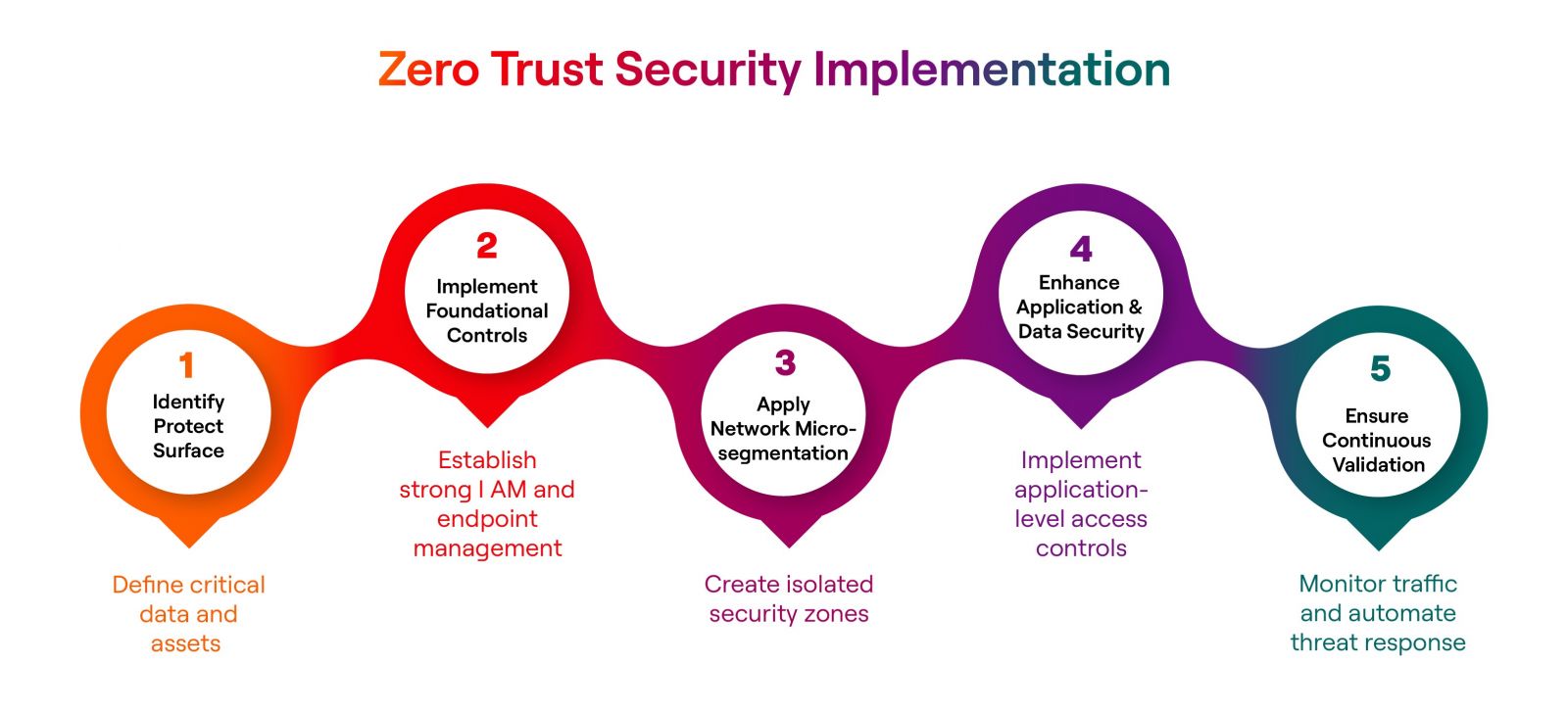
1. Discovery & Protect Surface Definition |
We begin by identifying your "protect surface"—your most critical data, applications, and assets (DAAS). We map transaction flows and define user access policies. You cannot protect what you do not fundamentally understand. |
|
2. Foundational Controls: Identity & Endpoint |
We start with the core pillars. This involves implementing strong Identity and Access Management (IAM) with Multi-Factor Authentication (MFA) for every user and service, and ensuring all endpoint devices are managed, healthy, and compliant. |
|
3. Network Micro-segmentation |
We help you move away from a flat, open internal network. Micro-segmentation creates small, isolated security zones around critical applications. This is a game-changer: even if one part of the network is breached, the attack is contained and cannot spread to other critical systems. |
|
4. Advanced Application & Data Security |
We move security closer to the data itself. This includes implementing application-level access controls, API security gateways, and modern Data Loss Prevention (DLP) tools that classify and protect sensitive financial data wherever it goes. |
|
5. Continuous Validation & Automation |
Zero Trust is not a "set and forget" project. It requires continuous monitoring of all traffic, deep logging, and using automation (like SOAR) to respond to threats in real-time. This phase includes regular re-validation with CREST penetration testing to ensure the architecture remains effective. |
Tangible Business Benefits for Financial Institutions
Adopting a Zero Trust strategy delivers powerful outcomes that resonate from the server room to the boardroom.
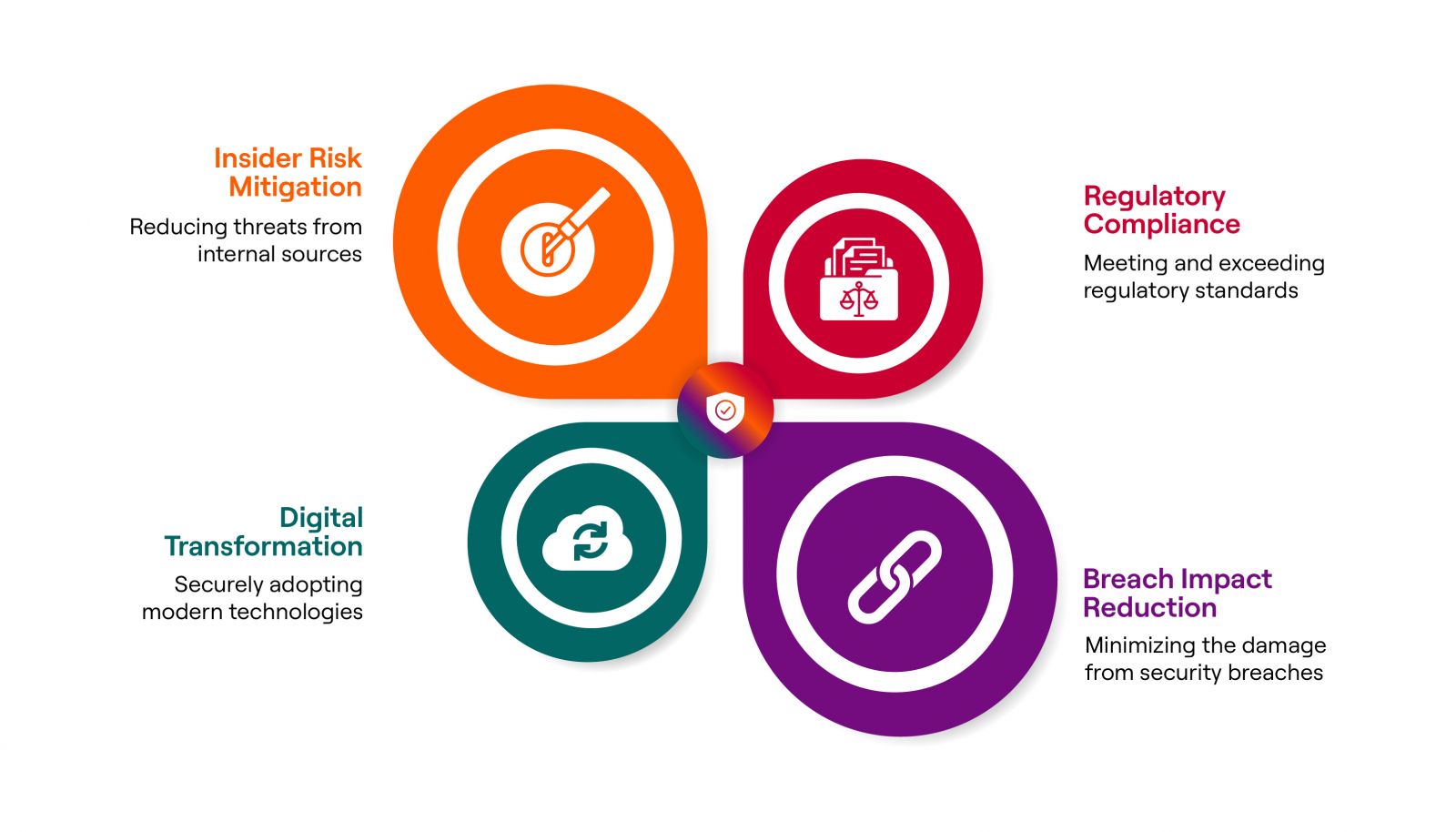
1. Superior Regulatory Compliance and Auditability
Confidently demonstrate to regulators like the RBI and international bodies that you have implemented a modern, data-centric security model that far exceeds basic compliance requirements.
2. Drastic Reduction in Breach Impact
Micro-segmentation contains the "blast radius" of an attack. By preventing lateral movement, Zero Trust ensures that a single compromised endpoint does not escalate into a catastrophic, headline-making data breach.
3. Secure and Accelerated Digital Transformation
Innovate with confidence. A Zero Trust architecture is designed for the modern, perimeter-less world, allowing you to securely adopt cloud banking systems, mobile apps, and FinTech partnerships without sacrificing security.
4. Robust Insider Risk Mitigation
By verifying every request and enforcing the principle of least privilege, Zero Trust significantly reduces the risk posed by both malicious insiders and employees whose credentials have been compromised.
Conclusion
The journey to a fully implemented Zero Trust architecture is complex and mission-critical. Partnering with a firm whose expertise in this domain is independently validated by both global (CREST) and national (CERT-IN) authorities is the most prudent and defensible path to success.
Is your institution's security architecture ready for the future of finance? Schedule a Zero Trust readiness assessment with our certified architects to build your strategic roadmap today.
Frequently Asked Questions:
1. What is Zero Trust Architecture in banking?
Zero Trust Architecture is a security framework that assumes no user or device is trusted by default, requiring continuous verification of every access request to protect financial data and systems.
2.How long does Zero Trust implementation take for banks?
Zero Trust implementation typically takes 12-24 months through a phased approach, starting with identity management and progressing through network segmentation to full data protection.
3.What are the regulatory benefits of Zero Trust for financial institutions?
Zero Trust helps financial institutions exceed RBI, DORA, and DPDPA requirements by providing demonstrable proof of data-centric protection, strong access controls, and operational resilience.
4.How much does Zero Trust cost for banks?
Zero Trust ROI is typically realized within 18 months through reduced breach costs, improved compliance posture, and accelerated digital transformation capabilities.